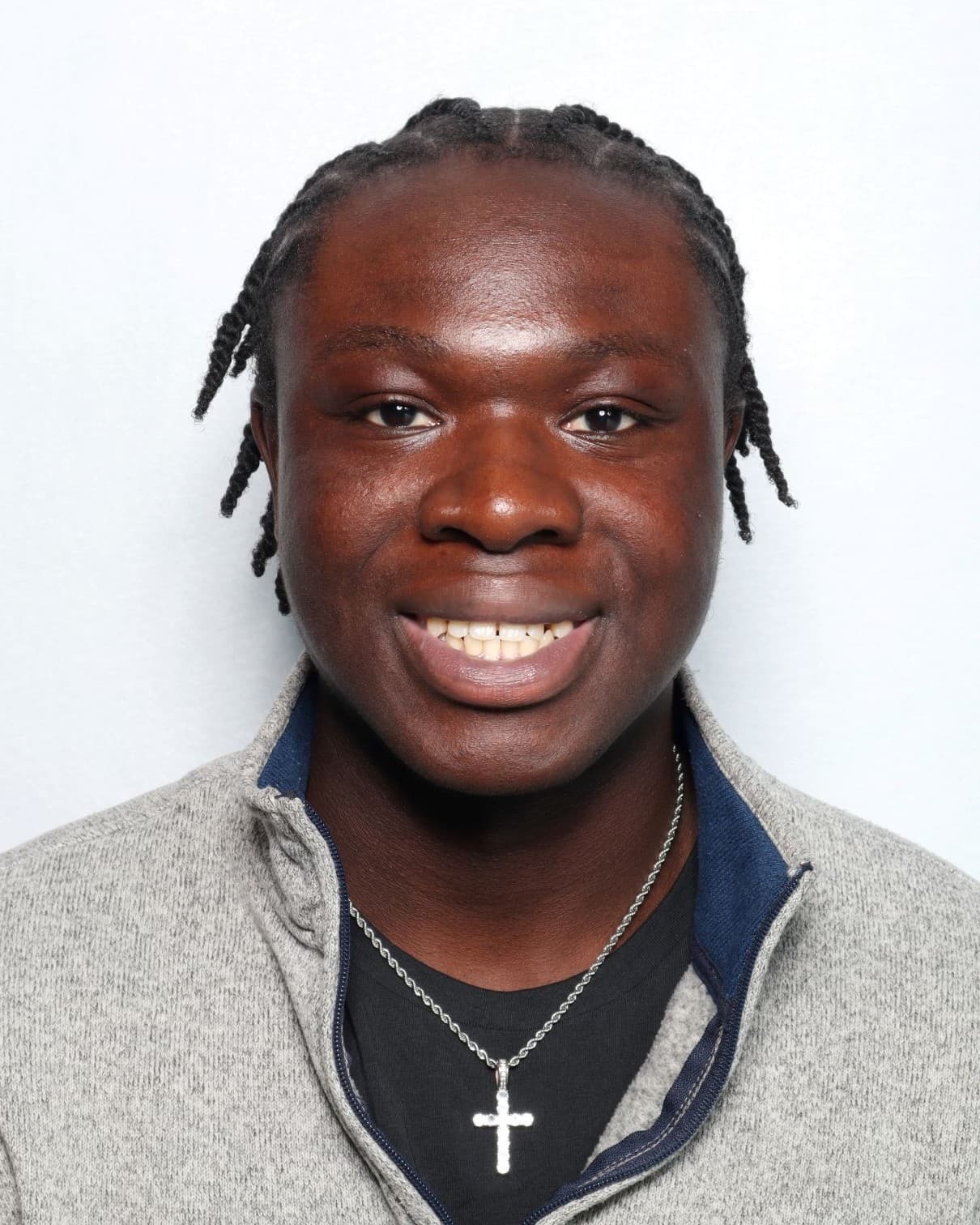
I am a data analyst at University of Illinois Athletics, building the pipelines, models, and dashboards people actually make decisions with.
I have also launched AI features and delivered analytics systems for a Fortune 500 client. I own problems end to end, which usually means I am still the one building.
B.S. Information Sciences, University of Illinois Urbana-Champaign. Minors in computer science and health technology.
What I work on
Data engineering and platforms
Ingest, model, serve. Contracts that do not break, pipelines that recover on their own, and surfaces that drive a decision rather than sit in a folder.
Python · SQL / Postgres · dbt · REST APIs & OAuth 2.0 · FTP/FTPS · pandas · Power BI
Cybersecurity
Security is an architecture decision, not a checklist at the end. Least-privilege access, auditable flows, explainable outputs, and secure defaults built in from day one.
I own the problem, not the ticket. Discovery, metric, ship, iterate. I have written the PRDs, run the stakeholder reviews, and held the line on scope when it mattered.
Applied analytics for public health and care delivery: surveillance, forecasting, cohorting, and FHIR/HL7 mapping with privacy designed in rather than bolted on.
Epidemiology · Time series · Clinical NLP · FHIR/HL7 · De-identification
Selected work
PhishNet AI
Paste a suspicious message and get a risk score with the specific signals behind it. I rebuilt it after finding that v1 parsed model output with a regex and silently left the score at zero whenever that regex missed, rendering dangerous messages as a reassuring green. v2 constrains the model to a JSON schema, throws instead of defaulting, and recomputes the risk level from the score rather than trusting the model to keep them consistent. The API key now lives in a serverless function. It also includes a passphrase generator built to NIST SP 800-63B, with entropy computed from the real wordlist.
A scouting and roster strategy dashboard across four leagues. A team-strength model with era-adjusted weights and exponential recency decay ranks programs over a ten-year window, and a valuation model estimates compensation for 1,000+ college players from performance, conference strength, and playing time.
A research platform for screening equities against structural criteria. Three FastAPI dashboards, four command-line tools, two scheduled jobs. The screener rebuilds nightly, running roughly 5,180 names through nine independent gates covering trend structure, base position, volume behavior, liquidity, and event risk. Any single failure blocks the name, so the output is a short list rather than a ranking. A constraint layer sits in front of it, reading current state on every call and refusing anything outside defined limits, because the logs showed the failures were never the analysis, they were the sizing. A failed overnight run announces itself out loud rather than leaving a stale board looking current.
Automated data pipeline, sports analytics integration
Replaced a manual multi-step download with automated Python pipelines pulling six data types across REST API and FTP channels. The API side uses OAuth 2.0 and parses 2,400+ session records. The FTP side filters a national data-sharing network from roughly 11,000 files (2.8 GB) down to the 110 that matter (23 MB), using MLSD batch listing to cut runtime.
Python · OAuth 2.0 · FTP/FTPS · pandas · ETL
Financial operations forecasting
Driver-based forecasting models and budget dashboards for a Division I athletics program. Historical actuals and forward-looking assumptions in one place, so leadership can scenario-plan live instead of waiting on a static spreadsheet.
Automated the full lifecycle of postgame survey analysis: ingestion, cleaning, topic modeling, and sentiment scoring, delivered as tagged weekly summaries with no manual effort. Raw feedback became structured, actionable insight.
Python · NLP · Automation
Operational analytics dashboards
Modeled KPIs end to end in dbt, wired them into a Power BI layer, and established a single source of truth across several systems. The measure of success was adoption: dashboards non-technical stakeholders actually kept using.
SQL · dbt · Power BI
NASA Space Apps Challenge, urban planning tool
Backend architecture for a tool helping Chicago planners spot environmental and socioeconomic patterns. API endpoints, data processing, and AI-powered insight modules over population density, air quality, income, and weather data, built under hackathon time constraints.
Data workflows, product framing, and an AI search feature for a Fortune 500 company, letting internal users query across company data conversationally. Details are under NDA, but I am happy to walk through the approach.
Product · Data engineering · AI integration
About
I have been a builder since I was a kid. I was the Lego kid, dumping the whole bin out and building something that was not on the box. That never really left me, it just turned into software.
I am a product manager and data engineer out of the University of Illinois. I define what to build, ship it, and measure whether it worked. Most PMs hand off to engineering. I stay in the room because I can do the work.
My background spans data engineering, health informatics, and cybersecurity, which means I ask better questions early and catch the problems that surface late.
The best products come from people who understand the data underneath them. That is the edge I bring.
Certifications
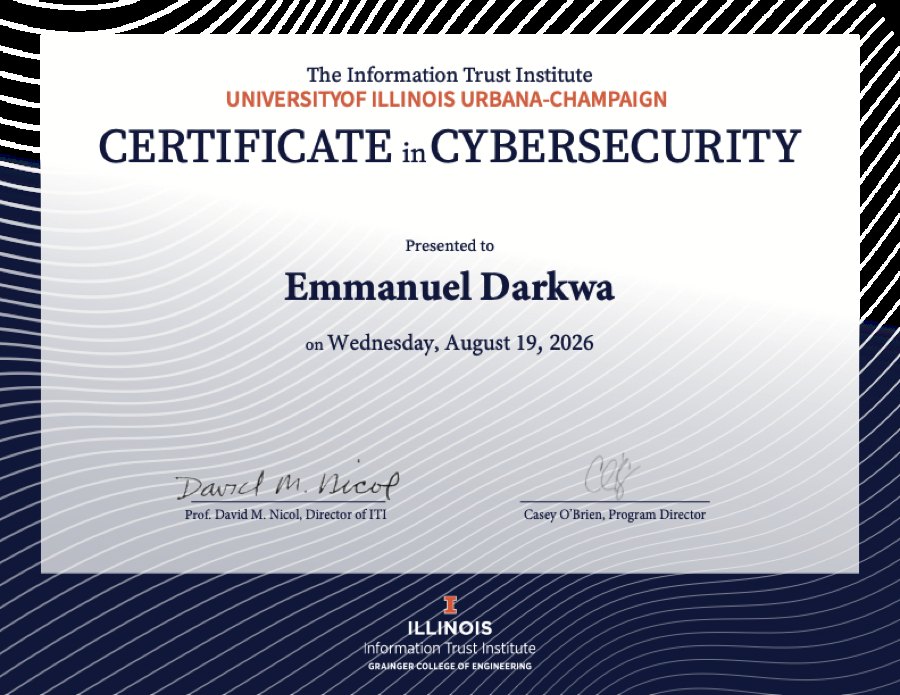
Certificate in Cybersecurity, Information Trust Institute, UIUCCompleted, Aug 2026
SAFe Product Owner / Product ManagerCompleted
Cisco: Introduction to CybersecurityCompleted
CompTIA Security+ (SY0-701)In progress
AWS Cloud PractitionerIn progress
Beyond the work
Sports
Lifelong hooper. The basketball tool exists because I care about the game, not only the data. Soccer was my first sport and I picked it back up around the World Cup.
Training
Certified personal trainer. Consistency is a system, not a mood. Same philosophy I bring to engineering.
Creating
Content at the intersection of sports, tech, fashion, and hoops culture.
Gear
I test gadgets and care about the last ten percent of the experience, the part most people skip.
Startups
Drawn to early-stage building, especially in Chicago. More interested in what gets made here than in chasing the coast.
Get in touch
Open to data, product and security roles in Chicago or remote. Always up for interesting conversations, collaborations, and ideas.